
In the middle of one of the most exciting innovation spaces in Europe - Cyber Valley Tübingen - KlebeBande realized a project that not only brings art and science together, but also allows them to merge narratively. A comprehensive interior art concept was implemented on over 7,000 square meters, giving the scientific spirit of the location a visual home.
The building itself - a research and development center - was both a source of inspiration and a stage. Instead of standardized decor and design from the assembly line, KlebeBande turned the research building into a medium for an individual approach. The aim was to find a design language that makes research visible and innovation tangible, creating a personal connection to the work on site.
Table Of Contents
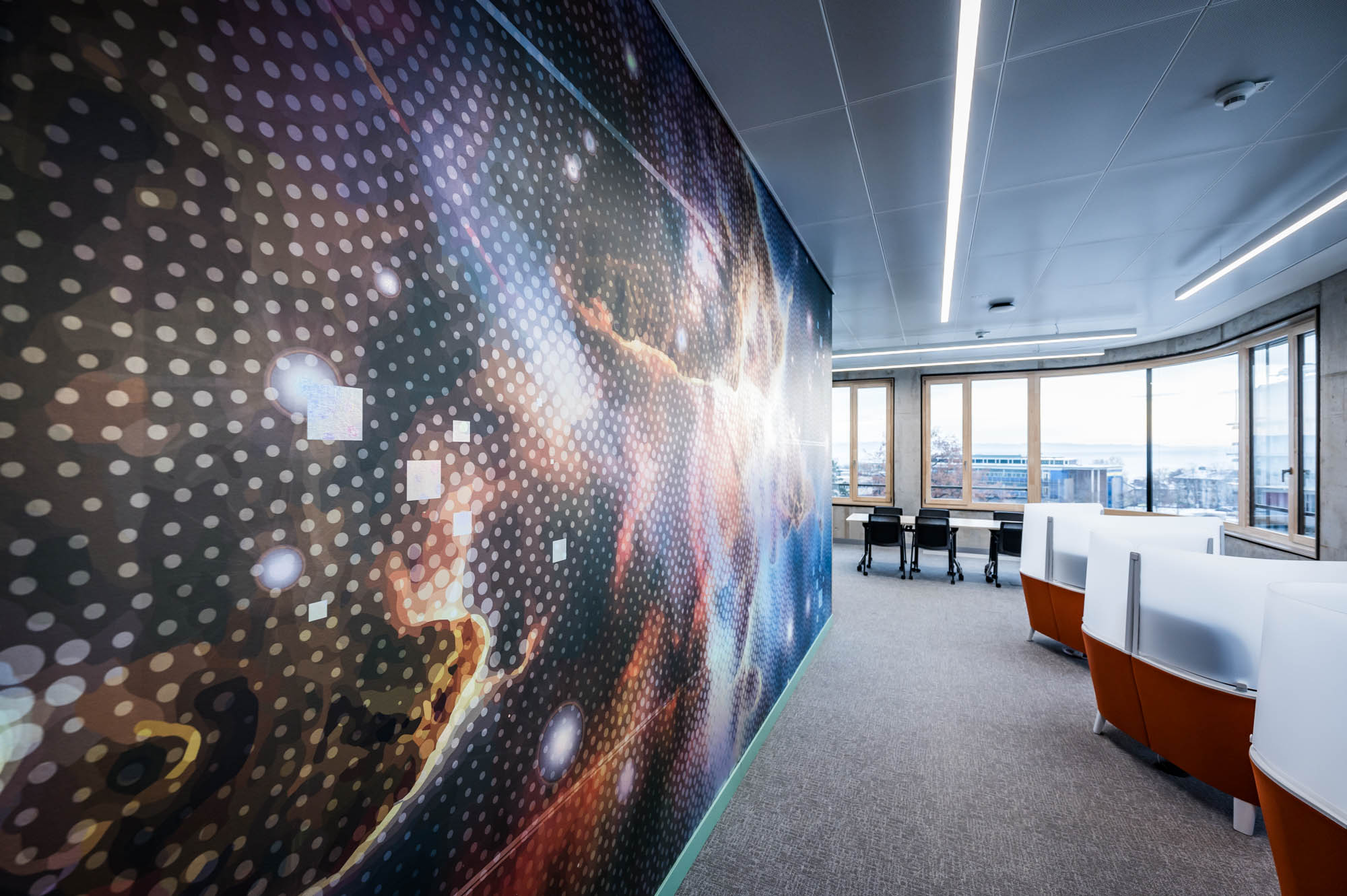
Comprehensive design from the entrance to the workplace
 Foyer with wooden sculptures
 Wall design in office area
Unlike typical office design projects, KlebeBande's task involved the comprehensive visual interior design of the entire research center and not just the workspaces. The design extends from the inviting, artistic and futuristic foyer to the stairs, corridors, workstations and conference rooms, right through to the social rooms, kitchens and bathrooms. Over 120 walls were designed on more than 7,000 square meters, including many glass surfaces and door areas that were aesthetically integrated.
The language of forms - science becomes interior art
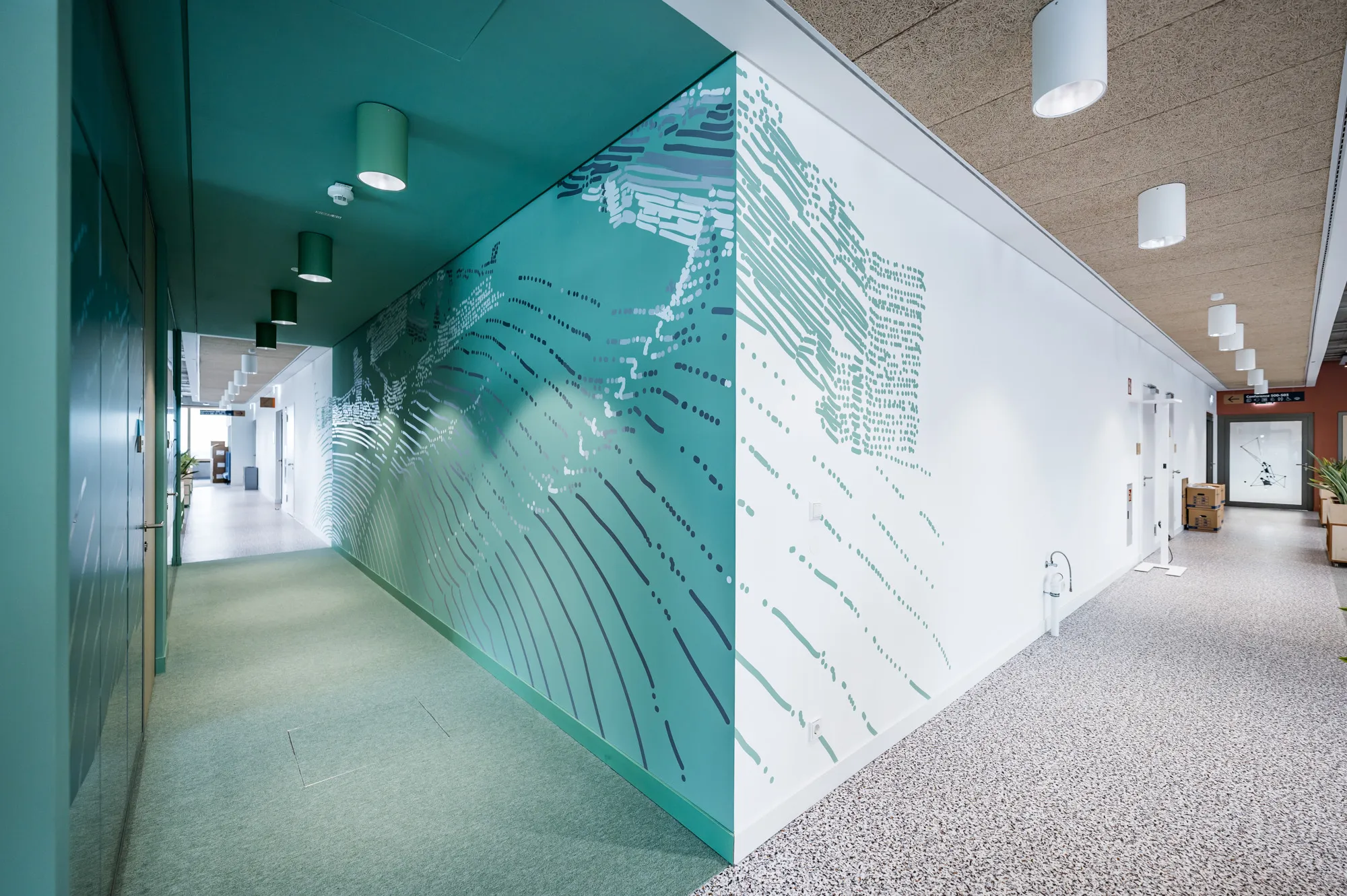 Wall design with LIDAR patterns
Right from the start, KlebeBande wanted to make the research content visible and transform it - in patterns, materials and spatial effects. Topics such as lidar scans, neural networks, data streams and semantic graph structures became the starting points for the design. The technical terms became an artistic and aesthetic challenge: how do you translate an algorithm into a line layout? How do you make data patterns tangible?
In numerous design iterations, wall designs were created that abstracted scientific content. Lines condensed into networks, surfaces reacted to directions of movement, colors followed functional references in the room. Every wall, every transition, every stairwell was more than just a surface - they became chapters of an overarching spatial concept.
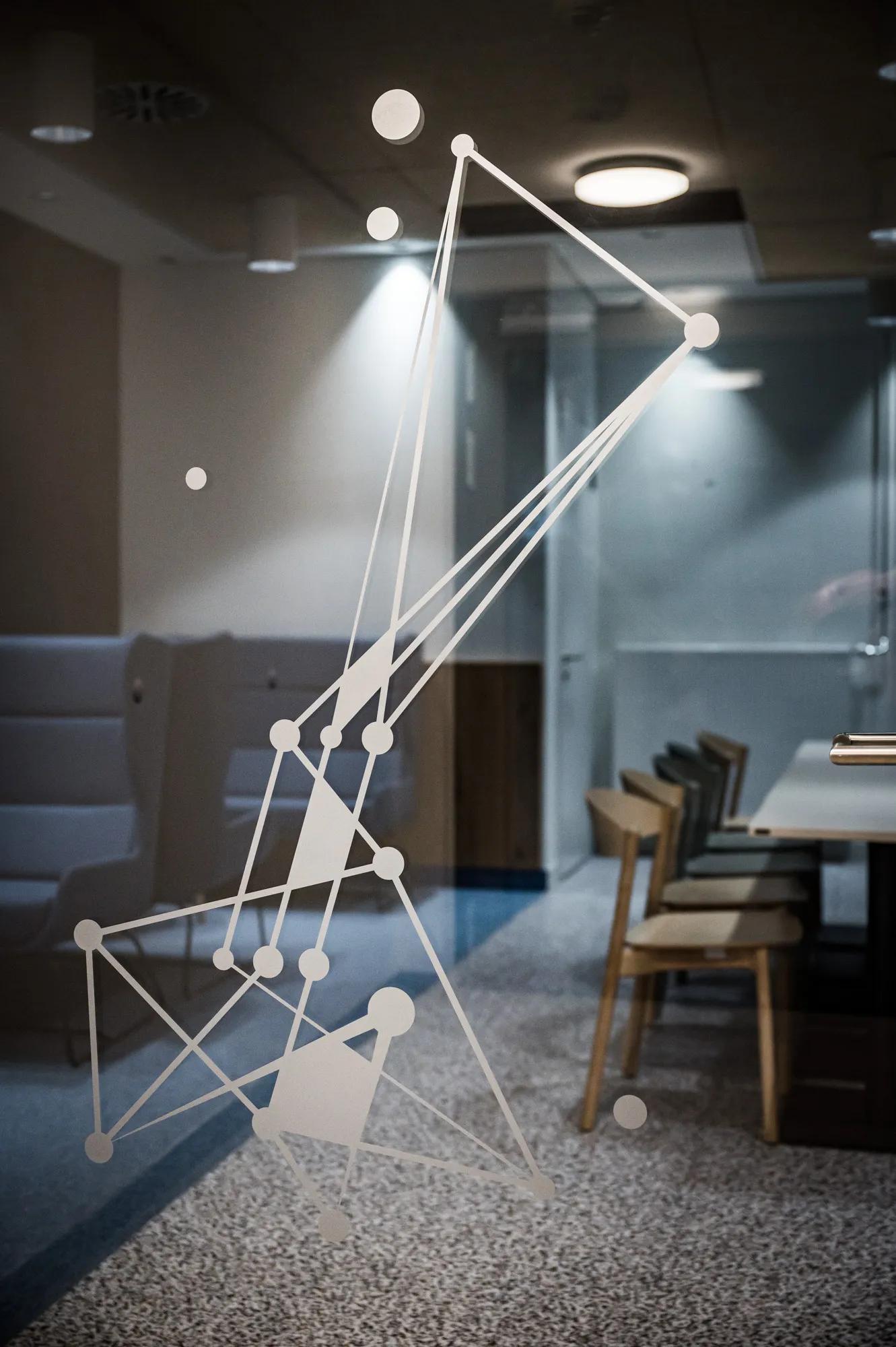 Glass film in a social space
Interior techniques - the complexity of the medium
A combination of different techniques was deliberately used to implement the design ideas. From wall paintings and modern wallpaper to sculptural objects.
Classic mural painting formed the backbone of our work. Using brushes, spray techniques and tape, we transformed raw surfaces into dynamic compositions that pick up on the movement in the room and at the same time radiate contemplative calm. Here, analog handwork merges with digitally inspired motifs - a deliberate bridge between humans and AI.
One particular challenge was the use of glass surfaces. These were seen not only as partition walls, but also as transparent communication zones. With the help of translucent designs, graphic layers were created that both direct daylight and create design depth.
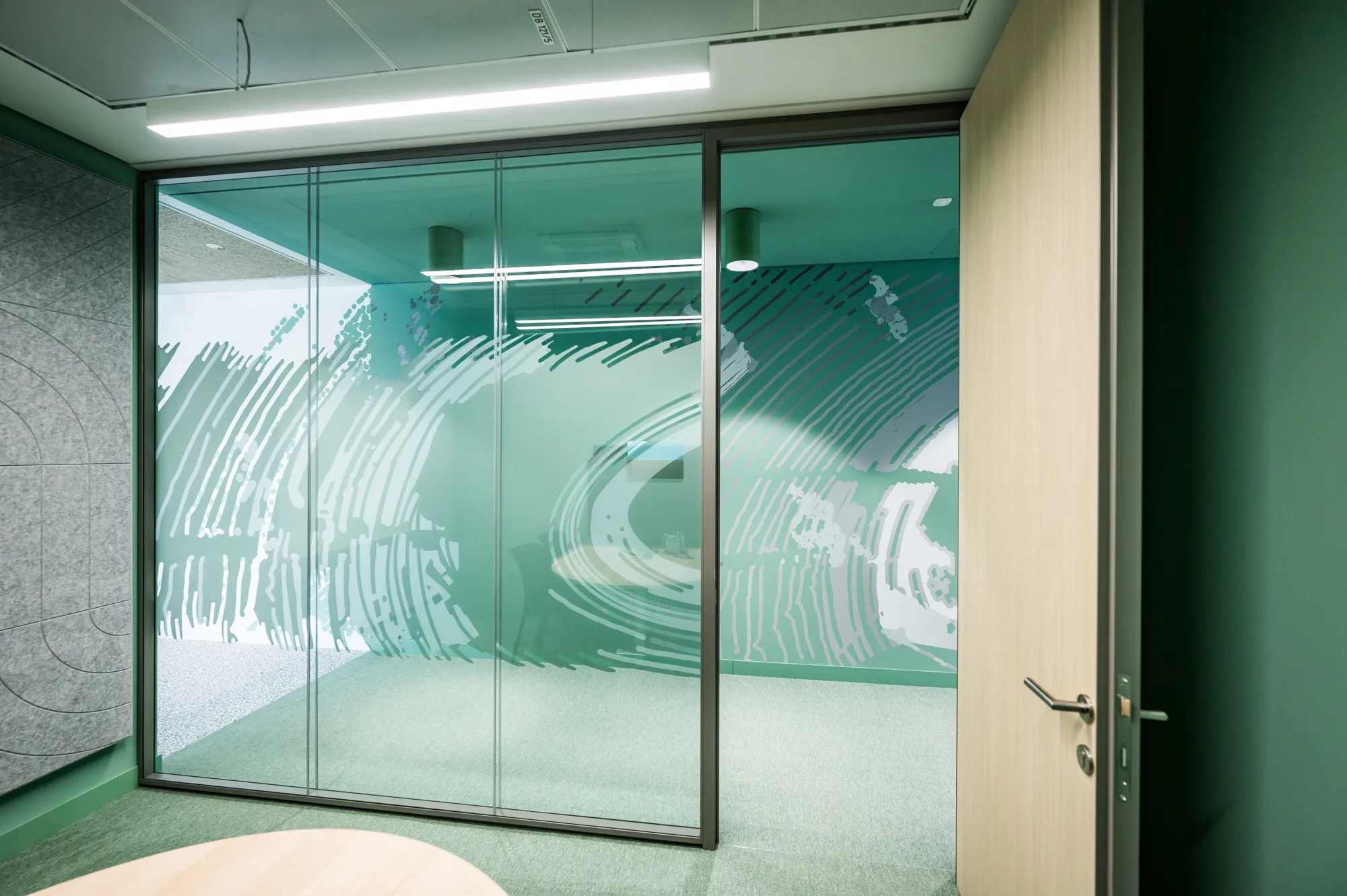 Glass film with LIDAR structures
 Wall design hallway and waiting area
We also sought a close connection to the region and its resources when working with wood. An installation in the foyer, made from different colored veneer panels from regional orchards, sums up this principle: science meets nature, high-tech meets craftsmanship. The organic material of the wood stands in deliberate contrast to the concrete and steel construction of the building and comes from the trees of nearby orchards.
In relation to the scientific themes, we developed our own large-scale wallpaper designs that translated scientific structures into ornamental surfaces. These partially iridescent and mother-of-pearl-like wallpapers structure the rooms, create depth and blur room boundaries - they are functional, atmospheric and charged with content.
A particular highlight is the so-called Petersburg hanging in the communication areas. Here we staged a large number of motifs in a dense, deliberately overlapping arrangement to create open, gallery-like meeting points. This type of presentation not only allows a playful approach to the subject matter, but also symbolizes the free exchange of ideas.
 Wooden body in the foyer
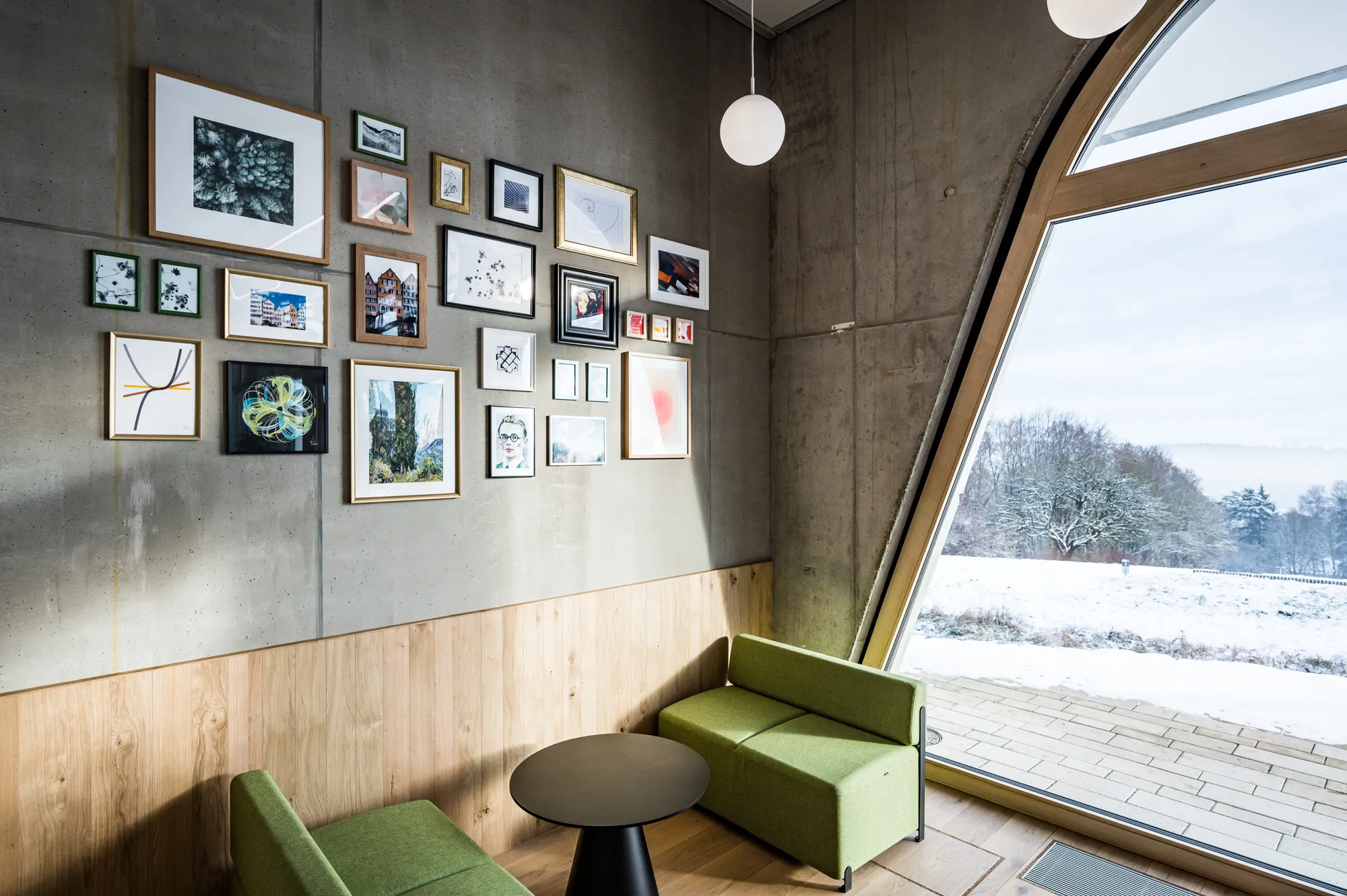 Social area with Petersburg hanging
 Wallpaper with mother-of-pearl effect
Design as a resonance chamber
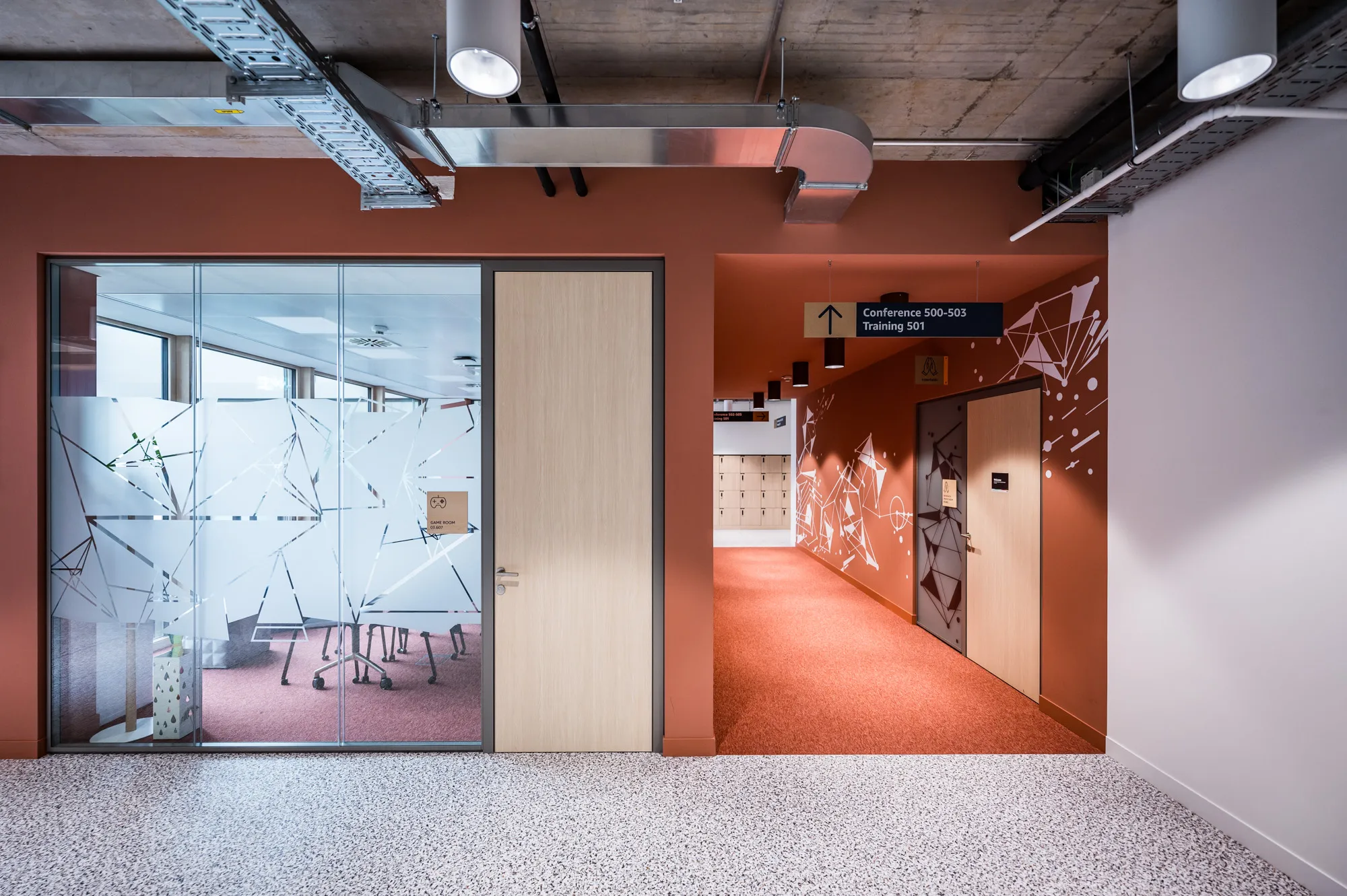 Hallway with glass and wall design
The interior concept was developed in close cooperation with the agency We Create Brands agency, which incorporated the guiding principles of New Work, identity and user-centricity. For KlebeBande, this project was not just a design brief, but an experimental space - a place where interior art was not an afterthought, but an integral part of the architecture.
Whether in an open workspace, in the conference area or on the way through the stairwell - each room tells a different story, creates its own atmosphere and invites reflection. The feedback from the teams on site was consistently positive. The integrative power of the design was particularly appreciated: it created places of encounter, concentration and exchange.
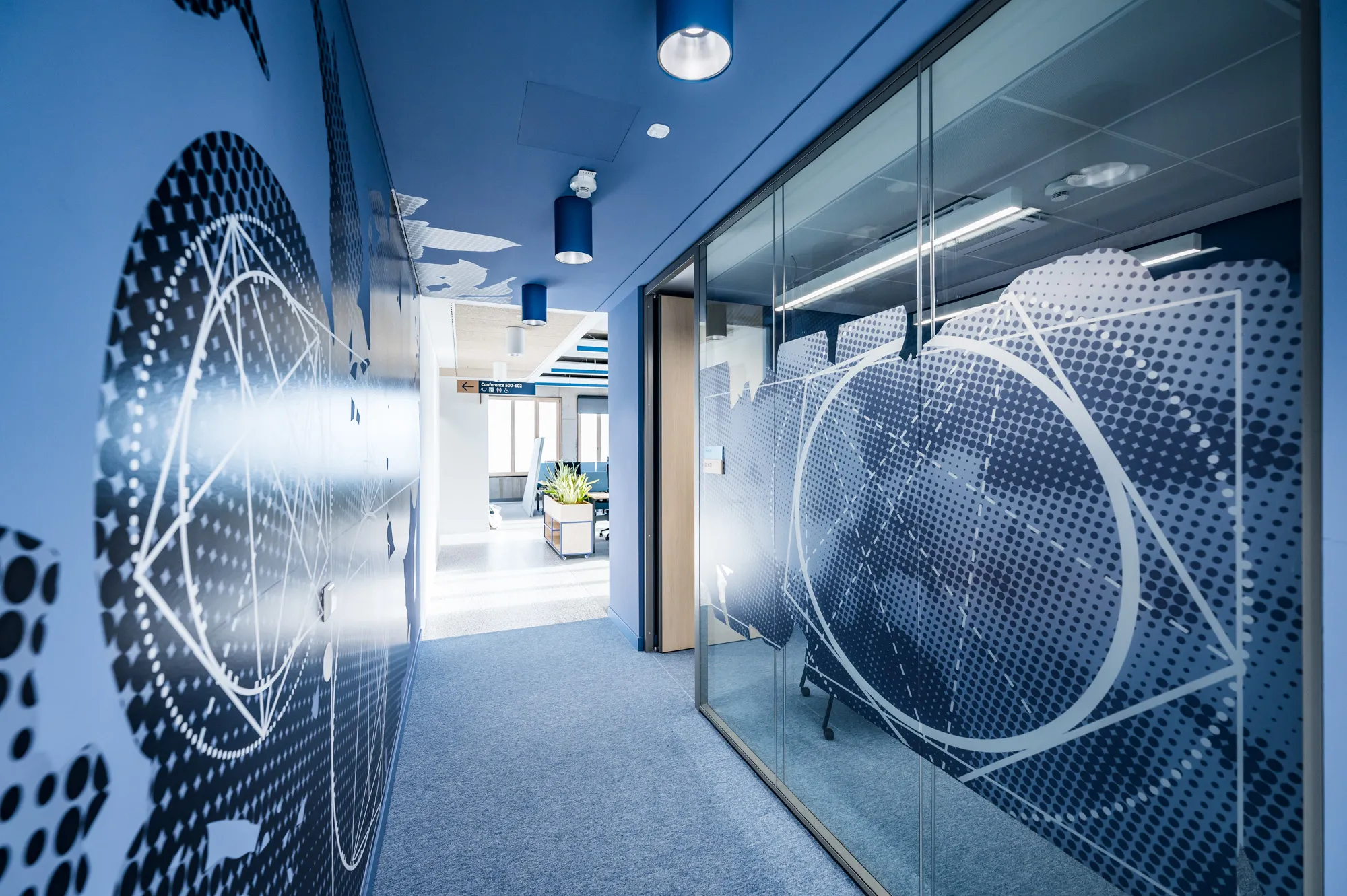 Corridor in front of a conference room
Interior art as the basis for liveable spaces
This project shows how art and design can create vibrant spaces in an environment characterized by research, technology and vision. Seemingly dry technical topics are given a very individual visual interpretation here, creating colorful, liveable workspaces for researchers. The project in Cyber Valley Tübingen combines office design and interior design with art to make scientific work visible. It shows that a holistic design concept that has been considered from the outset offers extensive opportunities to interweave design, buildings and on-site activities through art.
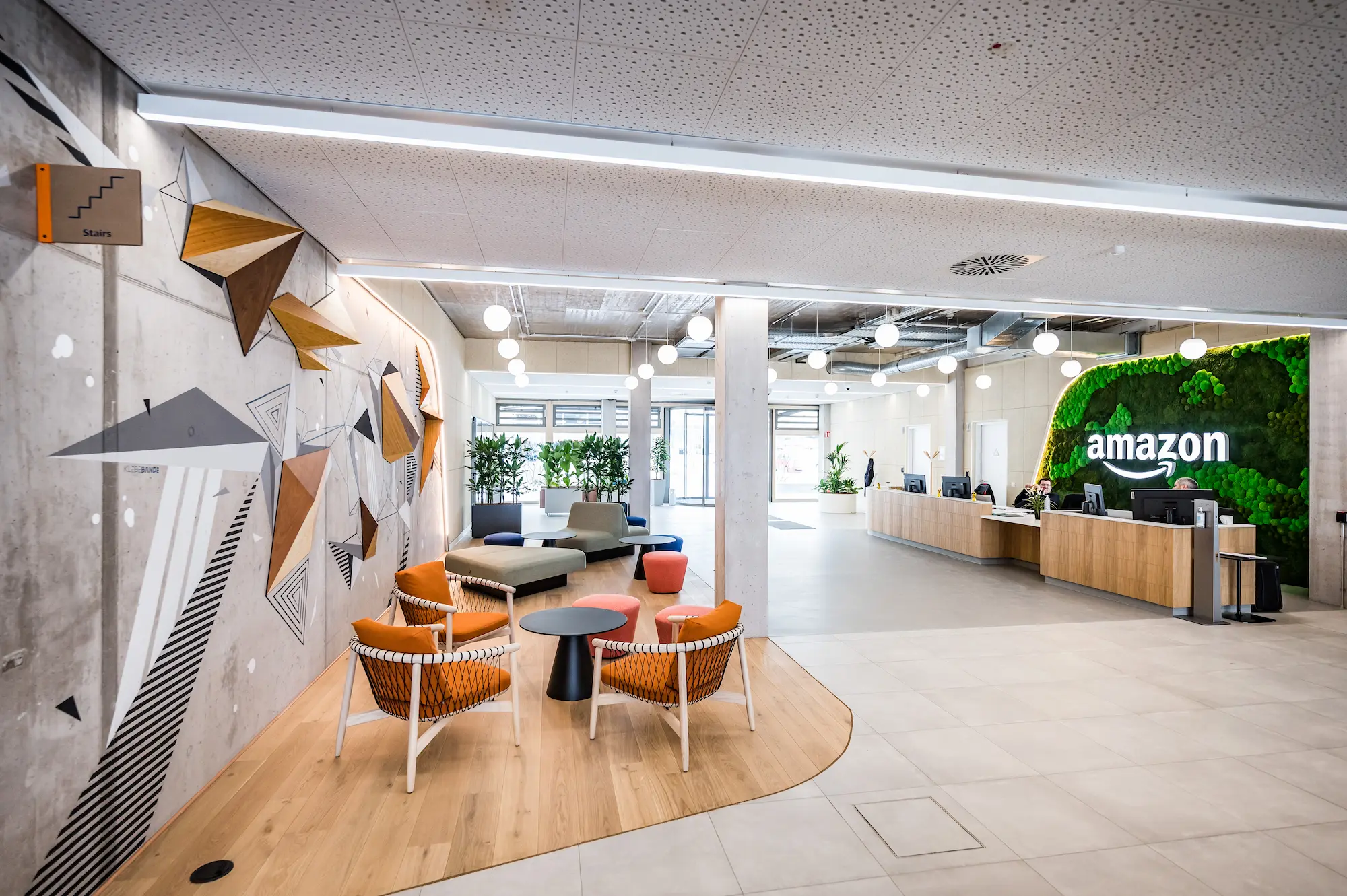 Foyer
Foyer