
The patterns developed by KlebeBande are inspired by, and distilled from, the endlessly inventive weaving concepts of Anni Albers (1899–1994). Albers was a pioneering artist and designer who gave visible form to the intelligence of materials. Her work demonstrated that meaning can arise through repetition, tension, rhythm, and restraint. In her weavings and textile designs, craftsmanship met analytical precision, resulting in both functional and poetic compositions.
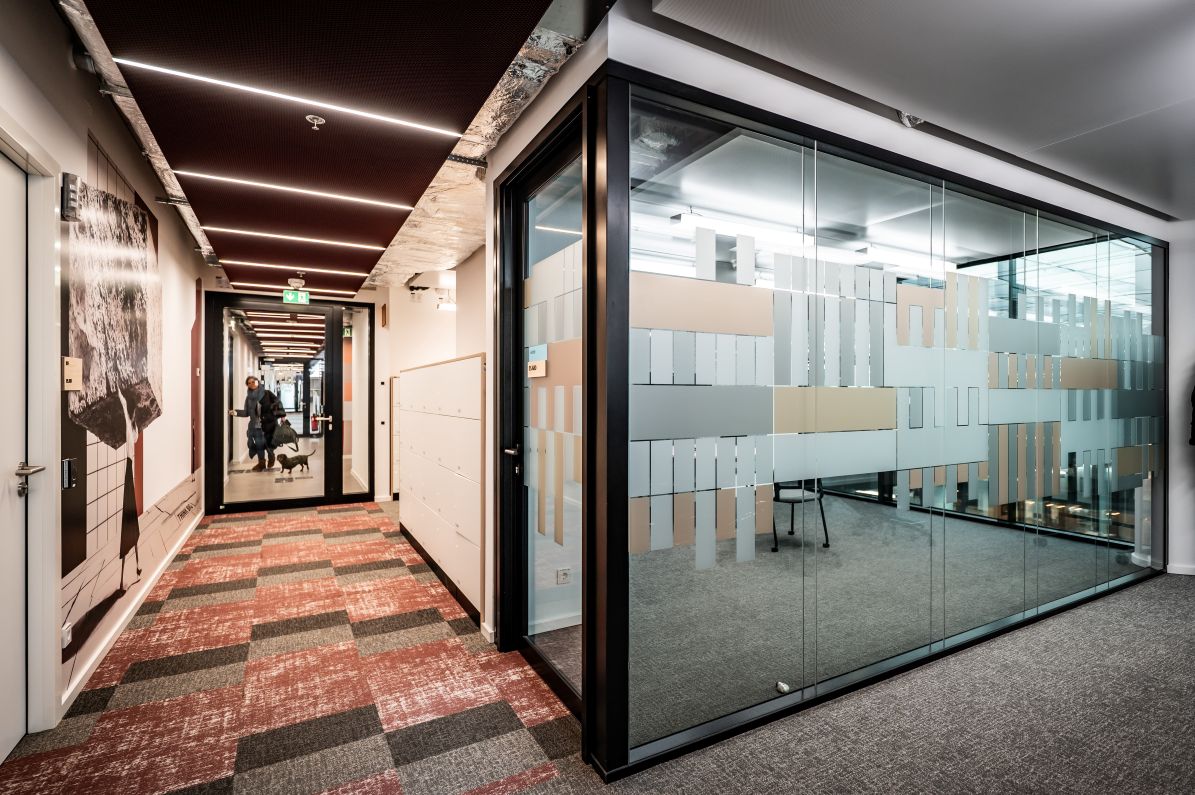
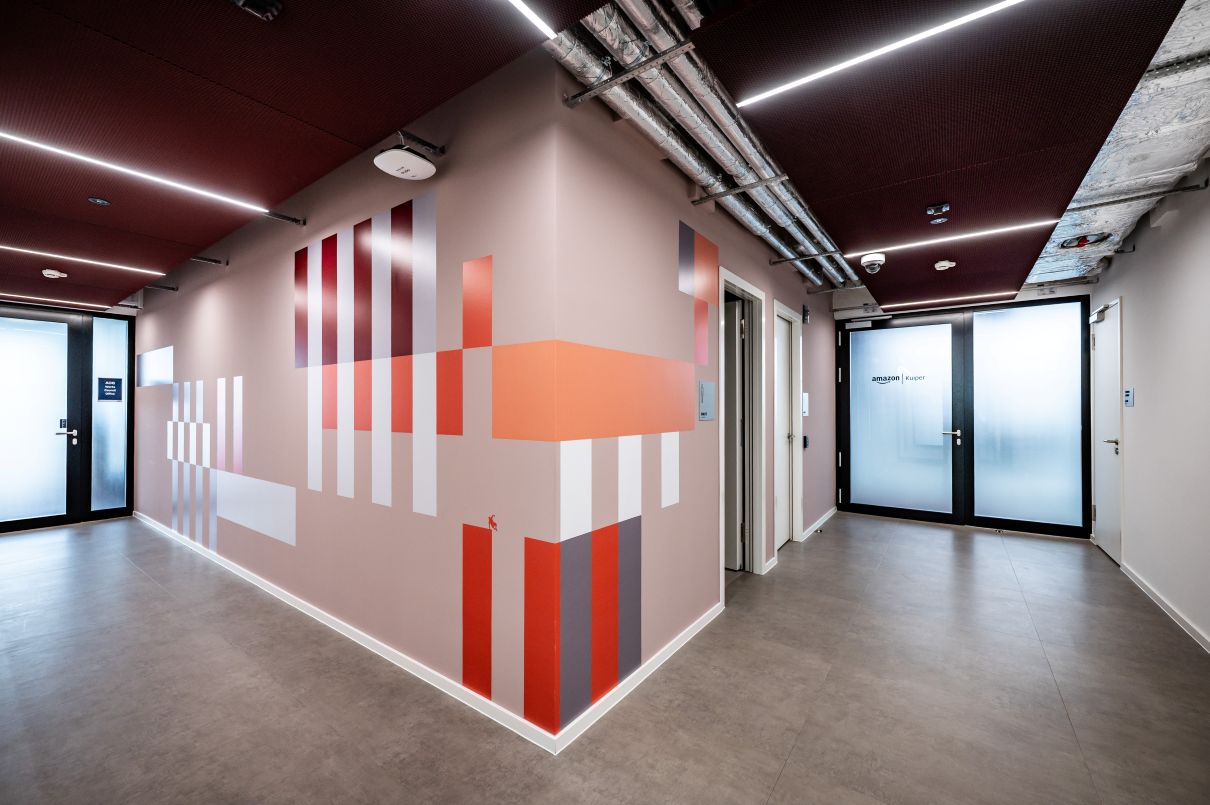
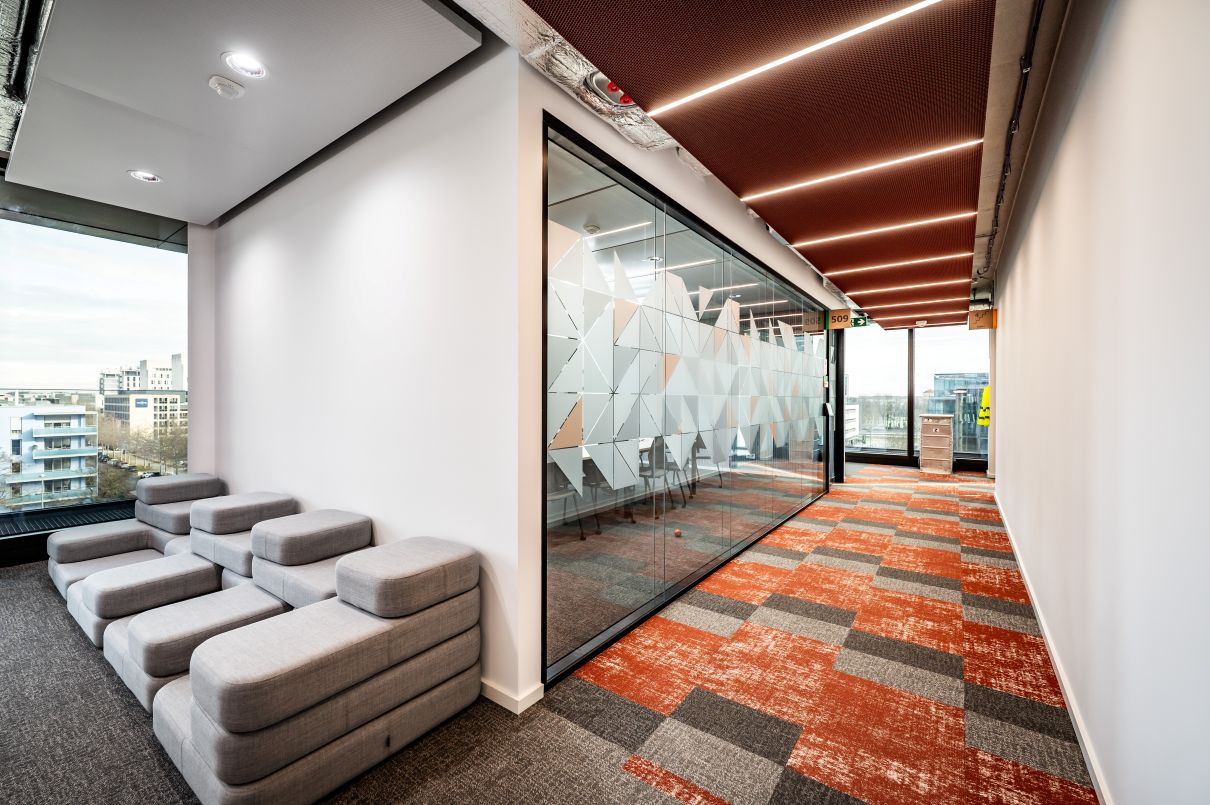
This idea continues throughout the building. Each level has its own distinct pattern, woven into floors, walls, door frames, and glass elements. These patterns shape the identity of each floor and create a coherent visual atmosphere. At the same time, they harmonize the main colors of the walls, corridors, and interior elements, giving every level its own character while preserving the unity of the whole building.
Embedded within these patterns are small hidden details, humorous “Easter eggs” waiting to be discovered. These playful elements invite a closer look and add another layer of meaning to the design, transforming the building into a place that rewards attention and curiosity.
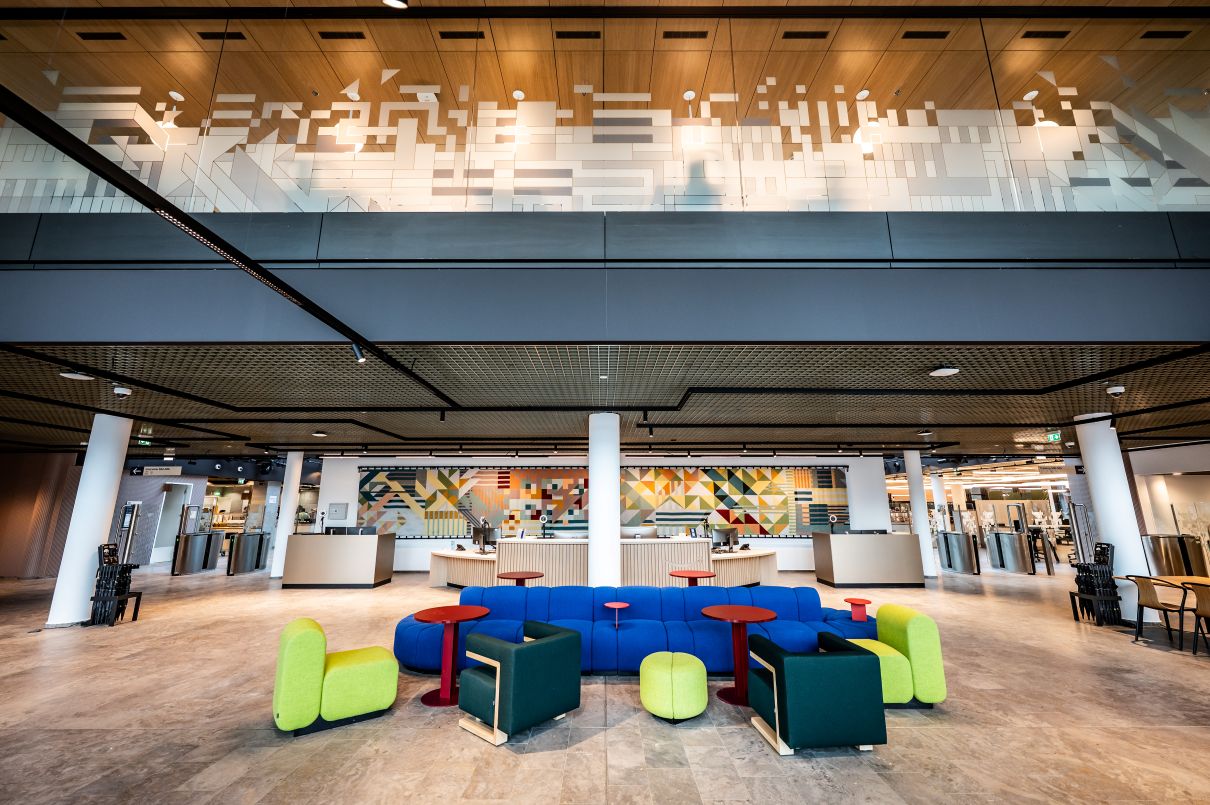
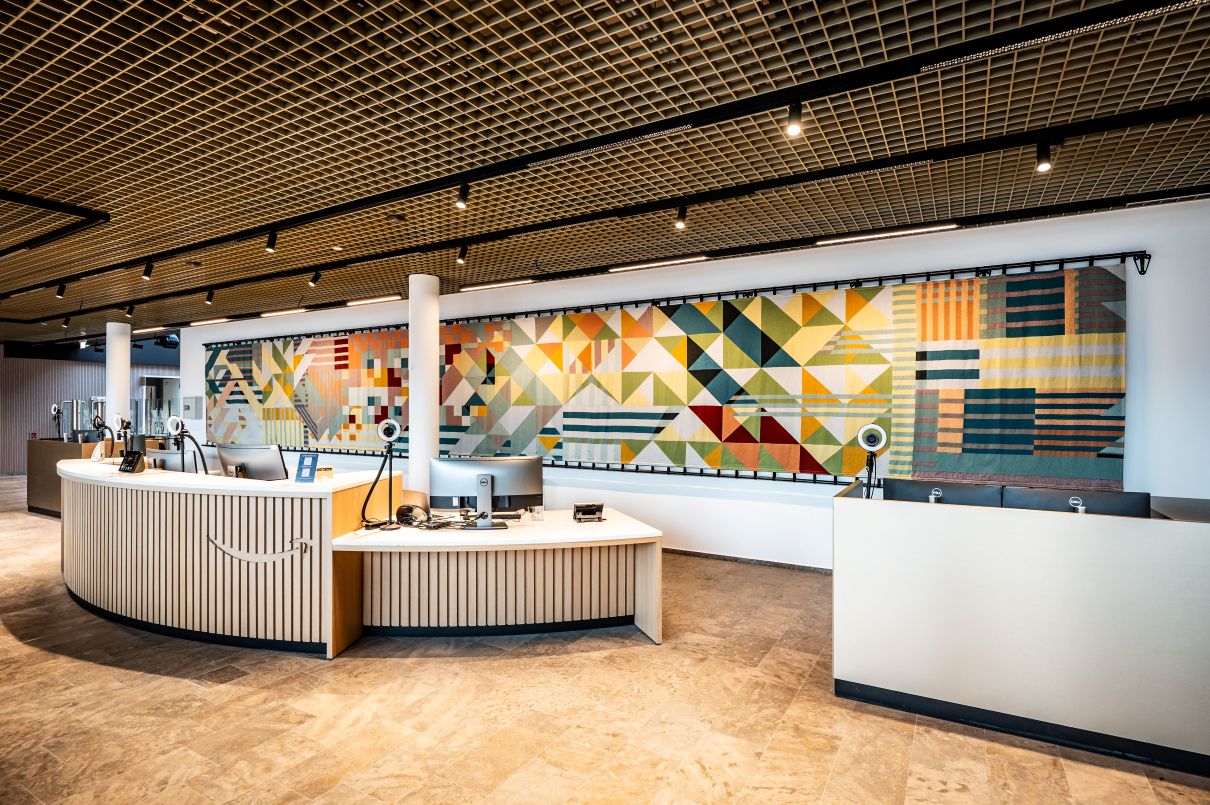
All of the patterns come together in two special moments within the building. The first is in the entrance area, where they are combined in a specially woven grand textile tapestry. A direct reference to Anni Albers and the tradition of weaving. The second point of convergence is visible on the glass walls of the central gallery. In this space, the patterns are united once more, this time transparent, luminous, and shimmering in response to the changing light of their surroundings. What begins as individual identities on each floor ultimately becomes a shared visual language, binding the entire building together.
The work draws strong inspiration from the life and practice of Anni Albers, who redefined weaving as a modern medium of artistic expression. Born in Berlin in 1899 and trained at the Bauhaus, she elevated textiles from a traditionally marginal craft to a field of intellectual and formal exploration. In her work, thread became a means to investigate structure, rhythm, texture, and spatial perception with both precision and clarity.
This approach informs the building’s interior art concept. Each floor is based on a distinct pattern derived from weaving structures, creating individual identities within a shared system. In the tapestry, these different visual languages converge. Lines, grids, and textures intersect and overlap, forming a composition that initially appears labyrinthic, yet resolves into a coherent whole shaped by connection and interdependence.
This principle mirrors the function of the building itself. Just as individual threads form a unified textile, the people working here contribute their expertise to a larger collective. The tapestry thus operates as both artwork and metaphor—reflecting collaboration, exchange, and shared purpose.
Beyond its conceptual role, the tapestry also defines the foyer spatially. Its woven surface adds acoustic softness, visual depth, and material presence. It shapes the atmosphere of arrival, demonstrating how textile can extend beyond decoration to influence architecture, perception, and the experience of place.